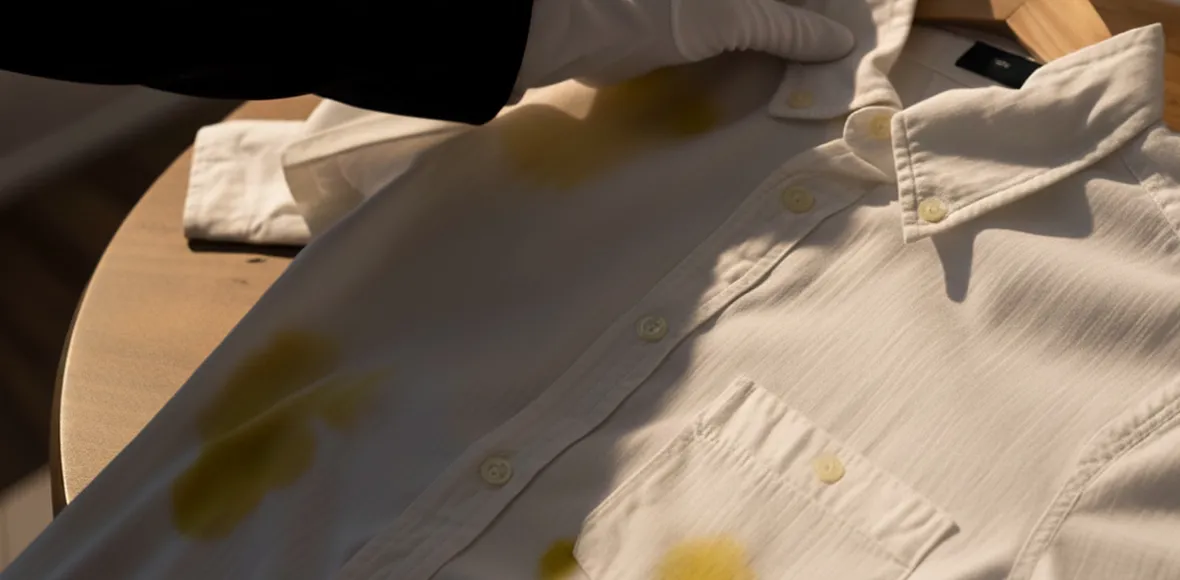
Every wardrobe meets its match eventually. The Sunday brunch curry that lands on the white linen shirt, the ballpoint that leaks in the suit pocket, the blood drop from a shaving nick on the cream silk tie. This cheat sheet exists for those moments — what to do, what NOT to do, and when to stop and call a professional.
The Three Universal Rules:
- Blot, never rub. Rubbing drives the stain deeper and spreads it sideways. Blot from the edges inward.
- Cold water for unknown stains, warm only when you are sure. Heat sets protein stains (blood, egg, milk) permanently.
- Test any solution in a hidden spot first. Inside hem, under collar, inside cuff — 30 seconds of patience prevents a permanent ring.
Category 1: Food & Beverage Stains
1. Red Wine
First move: Blot immediately with a dry white cloth. Cover liberally with salt or baking soda — let it absorb for 10 minutes, then brush off.
Next: Stretch the fabric over a bowl, pour boiling water from a height of 6 inches through the back of the stain. Never: Use red wine on red wine (an old myth that worsens the stain). For silk, wool, or any “dry clean only” tag — stop here and call a professional.
2. Coffee & Tea
First move: Blot dry. Mix 1 tablespoon white vinegar with 1 tablespoon dish soap in 2 cups cold water. Sponge onto the stain, let sit 5 minutes, rinse with cold water. Repeat if needed. Old coffee stains may need professional dry cleaning — the tannins bind to fibres over time.
3. Curry & Turmeric
The toughest food stain in Indian wardrobes. First move: Scrape off solids gently with a butter knife or spoon edge. Do NOT wash with water immediately — turmeric stains may turn red on contact with soap. Apply lemon juice and place the garment in direct sunlight for 1 hour. The combination of acid + UV breaks the curcumin. For silk sarees, structured suits, or expensive fabrics, skip this step and book a professional pickup.
4. Tomato Sauce / Ketchup
Scrape off excess. Rinse from the back with cold water. Apply a paste of baking soda + water, let dry, brush off. Treat any remaining tint with a mild detergent solution. Avoid hot water until the stain is gone.
5. Chocolate
Let it dry completely, then scrape off. Pre-treat with dish soap. Wash in cold water. For waxy chocolate (Cadbury, Hershey), place an ice cube on the spot first — the chocolate hardens and lifts off cleanly.
6. Cooking Oil & Ghee
First move: Generous layer of cornflour or talcum powder. Let it absorb for 20 minutes, brush off. Apply dish soap directly (designed for grease). Let sit 10 minutes, then wash in the warmest water the fabric label allows. For wool, silk, or suits — professional dry cleaning only. Water on oil-stained wool may cause the fibres to swell unevenly.
7. Wine (white) & Champagne
Less alarming than red wine but still tannin-based. Blot, then sponge with cold water + a drop of mild detergent. Air dry. If a faint ring remains, professional treatment is recommended.
8. Mustard
Mustard contains turmeric — same logic as curry stains. Scrape, lemon juice, sunlight. For premium fabrics, professional cleaning.
Category 2: Body & Protein Stains
9. Blood
The #1 rule: cold water only. Heat permanently bonds blood proteins to fibres. Rinse from the back with cold running water immediately. For dried blood, soak in cold water with a teaspoon of salt or hydrogen peroxide (test first — can lighten dyes). Never use hot water, never iron over a blood stain.
10. Sweat & Underarm Yellowing
Mix equal parts white vinegar, baking soda, and hydrogen peroxide into a paste. Apply to the yellowed area, let sit 30 minutes, wash normally. For severe yellowing or expensive shirts — professional dry cleaning prevents the gradual fabric weakening that DIY methods cause over time.
11. Milk & Dairy
Cold water rinse (heat sets the protein). Apply mild dish soap, blot, rinse. For older milk stains — the sour smell that develops requires professional enzymatic treatment.
12. Egg
Same as milk — cold water only. If egg has dried, scrape off the residue, then soak in cold salt water for 30 minutes before washing.
13. Vomit
Scrape solids. Rinse from the back with cold water. Pre-treat with a paste of baking soda + water. For odor, sponge with a 1:1 white vinegar + water solution. Wash promptly. For carpets, mattresses, or sofas — professional sanitisation is recommended.
Category 3: Cosmetic & Makeup Stains
14. Lipstick
Place ice on the stain to harden it. Scrape gently. Apply rubbing alcohol with a cotton swab (test for colourfastness). Blot, rinse with cold water. For collars on expensive shirts — professional treatment ensures the dye and oil components both lift cleanly.
15. Foundation & Concealer
Sprinkle baby powder to absorb the oil base. Brush off. Apply dish soap directly, work in gently, rinse with cold water. Repeat if needed.
16. Mascara
Treat as an oil-based stain — dish soap and cold water. For waterproof mascara, a small amount of rubbing alcohol may be needed (test first).
17. Nail Polish
Critical warning: Acetone (nail polish remover) destroys acetate, triacetate, and modacrylic fibres. Check the care label first. For safe fabrics: blot with non-acetone polish remover on a cotton ball, working from the outside in. For silk, wool, acetate — do not attempt at home. Professional stain removal is the only safe route.
Category 4: Ink & Dye Stains
18. Ballpoint Pen Ink
Place the stained side face down on a clean white cloth. Apply rubbing alcohol or hairspray to the back of the stain — the ink transfers downward onto the cloth below. Keep moving to a clean section of the cloth until no more ink transfers. Rinse, wash.
19. Permanent Marker
Hand sanitiser (high alcohol content) is the best DIY option. Apply, blot, repeat. Full removal often impossible at home — professional treatment uses solvents specific to permanent inks.
20. Highlighter
Soak in milk for 30 minutes (the proteins lift the fluorescent dye). Rinse, wash. Old highlighter stains may not fully lift — professional dry cleaning has higher success rates.
Category 5: Outdoor & Activity Stains
21. Grass
Pre-treat with a 1:1 white vinegar + dish soap paste. Let sit 30 minutes. Wash. For older grass stains on whites, hydrogen peroxide can help (test first on coloured fabrics).
22. Mud
Let it dry first. Mud is far easier to remove dry than wet. Brush off as much as possible with a stiff brush or vacuum. Then pre-treat any remaining mark with dish soap and wash normally.
23. Sunscreen
A surprisingly stubborn modern stain — the avobenzone in chemical sunscreens reacts with iron in tap water, creating an orange-brown stain. Apply lemon juice + salt paste, leave in sunlight for 30 minutes. For coloured fabrics, professional treatment is safer.
24. Chewing Gum
Place the garment in the freezer for 1 hour. The gum hardens and peels off in one piece. Any residue can be lifted with white vinegar.
25. Candle Wax
Let the wax harden completely. Scrape off the surface layer with a butter knife. Place a paper towel over and another underneath the stained area, iron on low heat — the wax melts into the paper. Move to a clean section of paper, repeat until no more wax transfers. For any colour residue, professional dry cleaning.
When to Stop and Call a Professional
DIY stain removal works for ~70% of household stains on washable fabrics. The other 30% — structured suits, silk sarees, designer lehengas, leather, wedding wear, and any “Dry Clean Only” label — demand professional treatment. The risk of permanent damage from a wrong choice (heat-setting blood, acetone on acetate, water rings on silk) often exceeds the value of attempting it at home.
Pristino's specialist stain removal service uses fabric-specific solvents, controlled temperature, and trained technicians for every category above. For a free pickup from your Hyderabad or Bengaluru address, schedule online or WhatsApp +91 8106047373. New customers receive 30% off their first order.
Stain Emergency? We Pick Up in 2 Hours.
Wedding lehenga, designer suit, or family saree — our specialist team handles the stain you cannot touch.
Schedule Free Pickup